Industrial automation is at the heart of New Zealand’s manufacturing transformation. As the country’s manufacturers strive for higher efficiency, quality, and agility, Siemens controllers have emerged as pivotal components driving this evolution. These advanced automation solutions enable manufacturers to optimise processes, reduce downtime, and maintain competitiveness in an increasingly global market.
In this article, we explore how Siemens controllers are enhancing industrial automation in New Zealand’s manufacturing sector. We delve into their capabilities, real-world applications, and the broader impact on productivity and innovation.
Understanding Siemens Controllers: The Backbone of Automation
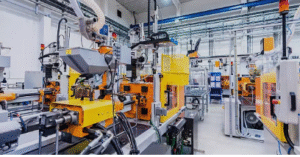 Siemens controllers, commonly recognised as programmable logic controllers (PLCs) and distributed control systems (DCS), serve as the central nervous system of modern industrial automation. These controllers monitor inputs from machinery, sensors, and user interfaces, executing programmed commands to control motors, valves, and other equipment with precision.
The hallmark of Siemens controllers lies in their reliability, scalability, and integration capabilities. From small, standalone systems to complex, networked automation platforms, Siemens offers a versatile portfolio that meets the varied demands of New Zealand’s manufacturing industries, including food processing, dairy, timber, and advanced manufacturing sectors.
Key Features Driving Adoption in New Zealand Manufacturing
Robust Performance and Reliability
New Zealand manufacturers often operate in environments demanding continuous production and minimal downtime. Siemens controllers are engineered to withstand harsh industrial conditions, delivering robust performance. Their high resistance to electrical noise, temperature variations, and mechanical stress ensures uninterrupted operation, which is critical in sectors like dairy processing and timber milling.
Flexible and Scalable Architecture
The manufacturing landscape in New Zealand is diverse, ranging from small batch operations to large-scale production lines. Siemens controllers offer modular architectures that allow manufacturers to start small and expand as needed. This flexibility supports incremental investment and reduces the risk associated with significant upfront costs, making advanced automation accessible even to smaller manufacturers.
Seamless Integration with Industry 4.0
With the rise of Industry 4.0, New Zealand manufacturers are increasingly adopting smart factories and connected devices. Siemens controllers are designed with open communication protocols and support for IoT technologies, enabling seamless integration into digital ecosystems. This connectivity allows real-time monitoring, predictive maintenance, and data-driven decision-making, all of which contribute to operational excellence.
Real-World Applications in New Zealand’s Manufacturing Sector
Enhancing Dairy Processing Efficiency
Dairy remains one of New Zealand’s flagship industries, and automation is key to maintaining quality and throughput. Siemens controllers manage complex processes such as pasteurisation, homogenisation, and packaging with precision. By automating repetitive tasks and optimising process parameters, manufacturers reduce waste, improve consistency, and ensure compliance with stringent food safety regulations.
Optimising Timber Production
The timber and wood processing sector benefits from Siemens controllers in automating cutting, sorting, and drying processes. These controllers coordinate multiple machines along the production line, synchronising operations to maximise output and reduce bottlenecks. The precise control offered also enhances product quality, reducing defects and improving yield.
Supporting Advanced Manufacturing
New Zealand’s growing advanced manufacturing sector, which includes electronics and aerospace components, demands high precision and flexibility. Siemens controllers enable manufacturers to automate complex assembly processes with high repeatability. Their programmable nature allows for rapid reconfiguration, supporting small batch production and customisation without compromising efficiency.
The Economic Impact of Siemens Controllers on New Zealand’s Manufacturing
Investing in Siemens controllers yields significant economic benefits for New Zealand manufacturers:
- Increased Productivity: Automation reduces cycle times and labour-intensive tasks, enabling manufacturers to increase output without proportionally increasing costs.
- Improved Product Quality: Consistent and precise control leads to fewer defects, reducing rework and waste.
- Lower Operational Costs: Predictive maintenance enabled by Siemens controllers minimises unplanned downtime and extends equipment life.
- Enhanced Competitiveness: Manufacturers equipped with advanced automation solutions can respond swiftly to market demands and maintain export competitiveness.
Conclusion:
Siemens controllers have become indispensable to New Zealand’s manufacturing sector, enabling the country’s industries to enhance productivity, quality, and flexibility. Their robust performance, scalability, and compatibility with emerging digital technologies position them as the backbone of industrial automation in New Zealand.
As manufacturers continue to navigate a rapidly evolving global landscape, leveraging Siemens controllers will be essential in maintaining competitiveness and driving innovation. The journey toward fully integrated, intelligent factories is well underway, and Siemens controllers remain at the forefront of this exciting transformation.