In Australia’s fast-paced and highly regulated food and pharmaceutical industries, maintaining a reliable cold chain is crucial. One of the lesser-known yet critical tools in this domain is the pallet freezer spacer. These simple yet ingenious devices play a significant role in improving airflow around palletised goods, ensuring uniform freezing, reducing spoilage, and increasing operational efficiency. As Australian businesses continue to seek innovation in cold storage and logistics, pallet freezer spacers are proving to be a valuable investment.
The Role of Pallet Freezer Spacers in Cold Chain Logistics
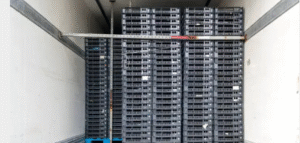 Cold chain logistics focuses on maintaining the quality and safety of temperature-sensitive products, from processing facilities to retail outlets, such as supermarkets and hospitals. In freezing applications, especially blast freezing, airflow is crucial for rapidly and uniformly lowering product temperatures. Pallet freezer spacers are interlocking plastic devices placed between stacked layers on a pallet. They create space for cold air to circulate individual boxes or cartons, accelerating and equalising the freezing process.
This function is particularly critical in Australia’s export-focused food industry, where goods such as meat, seafood, and dairy products must meet stringent quality and safety standards. Delays or uneven freezing can lead to bacterial growth or product rejection, which can be costly for both producers and distributors.
Why Pallet Freezer Spacers Matter for Australian Businesses
Pallet freezer spacers offer a cost-effective solution to several cold storage challenges:
Improved Freezing Efficiency
In high-throughput operations such as meat processing facilities or seafood exporters, pallet freezer spacers significantly reduce the time required to freeze products. It not only lowers energy consumption but also enhances throughput and productivity.
Reduction in Product Loss
Without adequate airflow, the outer cartons freeze before the inner ones, potentially leading to product degradation in the centre of the pallet. Pallet freezer spacers prevent this by promoting even air distribution, ensuring all products reach the target temperature simultaneously.
Optimisation of Freezer Capacity
In Australia’s competitive logistics landscape, optimising every square metre of freezer space is crucial. By enabling faster freezing, pallet freezer spacers help rotate inventory more quickly, reducing storage time and allowing more frequent turnover.
Support for Compliance and Safety Standards
Australian food safety regulations, such as those enforced by Safe Food Australia and export inspection services, demand precise temperature controls during food processing and storage. Pallet freezer spacers help maintain consistent conditions, supporting compliance and audit requirements.
Innovations and Materials in Pallet Freezer Spacers
The design and materials used for pallet freezer spacers have undergone significant evolution. Modern spacers in the Australian market are typically made from high-density polyethylene (HDPE) or polypropylene. These materials are food-grade, durable, and resistant to extreme temperatures and cleaning chemicals. The interlocking design enables stable stacking, facilitates easy handling, and ensures compatibility with automated systems.
Furthermore, some Australian suppliers now offer customisable pallet freezer spacers designed to fit specific pallet sizes or to accommodate varying product packaging. With logistics becoming more specialised, the demand for adaptable and modular freezing solutions has driven innovation in spacer design.
Industries in Australia Benefiting from Pallet Freezer Spacers
Several key sectors in Australia benefit from the strategic use of pallet freezer spacers:
- Meat Processing and Export: Australia is one of the world’s leading exporters of beef and lamb. Processing facilities in Queensland, New South Wales, and Victoria rely on pallet freezer spacers to efficiently freeze carcasses and cuts before shipping them overseas.
- Seafood Industry: With thriving fisheries in Western Australia, South Australia, and Tasmania, the seafood industry demands precision freezing to maintain freshness for domestic and international markets.
- Frozen Produce: Australia’s agricultural regions supply vast quantities of frozen fruits and vegetables, where rapid freezing is crucial to preserve flavour and nutrients.
- Pharmaceuticals and Biotech: Temperature-sensitive vaccines, enzymes, and lab samples also require rapid and even freezing. Pallet freezer spacers help maintain the integrity of pallets during storage and transport.
Conclusion:
In Australia’s temperature-sensitive supply chains, pallet freezer spacers are an essential yet often overlooked tool. Their ability to enhance freezing performance, safeguard product integrity, and facilitate regulatory compliance makes them a valuable asset across multiple industries. From food processing to pharmaceuticals, businesses looking to enhance their cold chain efficiency should consider investing in high-quality pallet freezer spacers. As demand for cold storage continues to grow nationwide, these innovative tools will remain central to efficient, safe, and sustainable logistics.